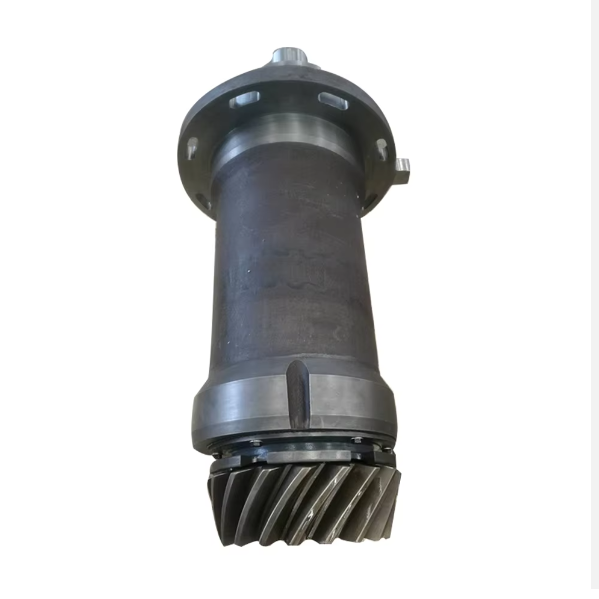
This paper details the hydraulic motor of cone crushers, a key power component that converts hydraulic energy into mechanical rotational energy, mainly used for adjusting the discharge setting and controlling the reset of safety cylinders. It elaborates on its composition, including the motor housing, rotating shaft, piston assembly (or rotor set), valve plate, sealing components, bearings, and spring mechanism (in some models), along with their structural features. The casting process for the motor housing (material selection, pattern making, melting, heat treatment, inspection), machining processes for components like the housing, rotating shaft, piston, and cylinder block, as well as the assembly steps are outlined. Additionally, quality control measures are specified, covering material testing, dimensional accuracy checks, pressure and leakage testing, performance testing, and fatigue testing. These manufacturing and quality control processes ensure the hydraulic motor provides reliable and precise performance for cone crusher operations under heavy-duty conditions.

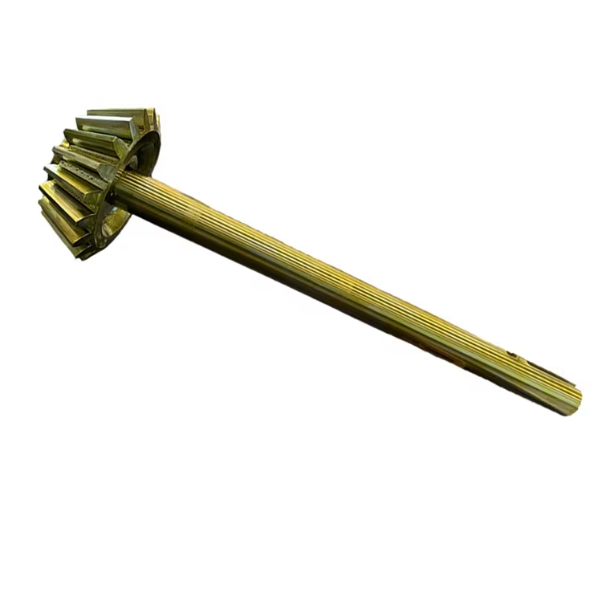
This paper details the countershaft of cone crushers, a key transmission component that transfers power from the input pulley to the eccentric shaft via a bevel gear, ensuring stable power transmission. It outlines its composition, including the countershaft body, bevel gear, pulley hub, bearing seats, keyways, and lubrication holes, along with their structural features. The casting process for gear and hub components (material selection, pattern making, molding, melting, heat treatment, inspection), machining processes for the countershaft body (forging, rough/finish machining, heat treatment), gear machining (cutting, heat treatment, grinding), and assembly steps are elaborated. Additionally, quality control measures covering material validation, dimensional checks, surface/structural integrity inspection, functional testing, and lubrication verification are specified. The countershaft’s precise manufacturing and strict quality control are critical for reliable operation of cone crushers under heavy loads

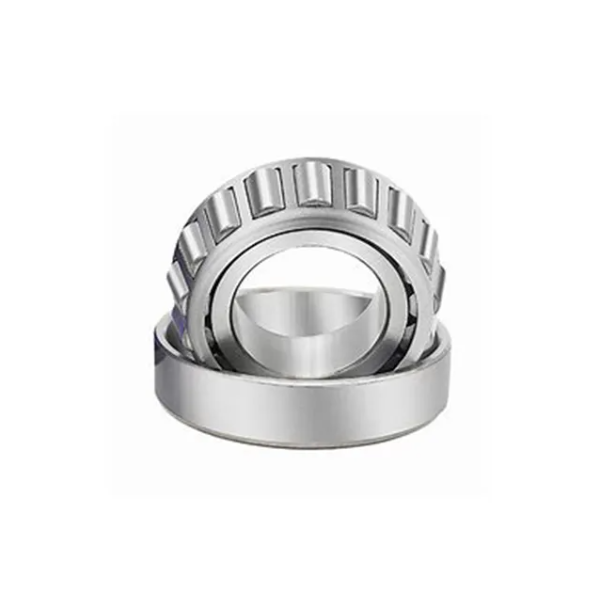
This paper elaborates on the drive shaft bearing of cone crushers, a key component in the transmission system that supports the drive shaft, bears loads, reduces friction, and ensures stable operation of the transmission system. It details its composition, including bearing housing, rolling elements, inner/outer rings, cage, sealing devices, and lubrication channels, along with their structural features. The casting process of the bearing housing (material selection, pattern making, melting, heat treatment, inspection), machining processes for components (rough/finish machining, heat treatment, grinding, assembly), and quality control measures (material inspection, dimensional accuracy check, surface quality inspection, performance testing, lubrication validation, final inspection) are also outlined. The drive shaft bearing's precise manufacturing and strict quality control are crucial for the efficient and reliable operation of cone crushers.

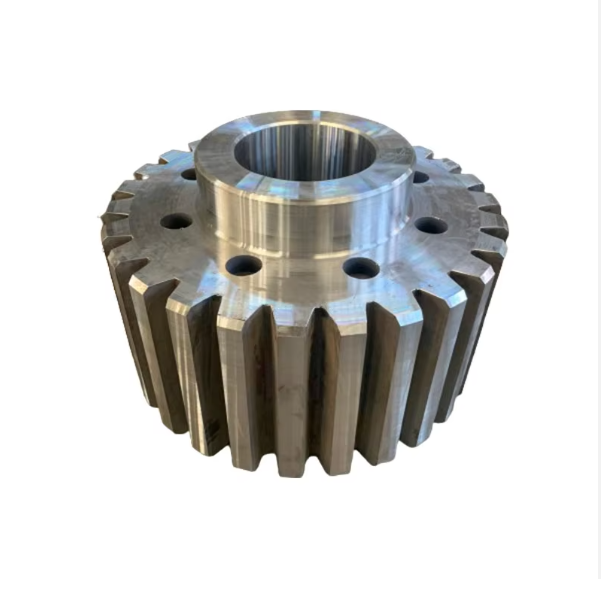
The cone crusher adjustment gear, a key part of the gap adjustment system, modifies the crushing gap between mantle and concave to control product size. Its functions include gap adjustment (converting rotation to vertical bowl movement), torque transmission, locking adjusted positions, and load distribution, requiring high strength and precise tooth geometry. Structurally, it is a ring-shaped component with a gear ring body (high-strength cast steel ZG42CrMo), external/internal teeth (module 8–20), mounting flange, optional threaded interface, lubrication channels, and locking features. Manufacturing involves sand casting (material selection, pattern making, molding, melting/pouring, heat treatment), machining (rough machining, tooth machining, thread/flange processing, drilling lubrication channels), and surface treatment (tooth carburizing, epoxy coating). Quality control includes material testing (composition, tensile strength), dimensional checks (CMM, gear measuring center), structural testing (UT, MPT), mechanical performance testing (hardness, load tests), and functional testing. These ensure reliable, precise gap adjustments for consistent cone crusher operation

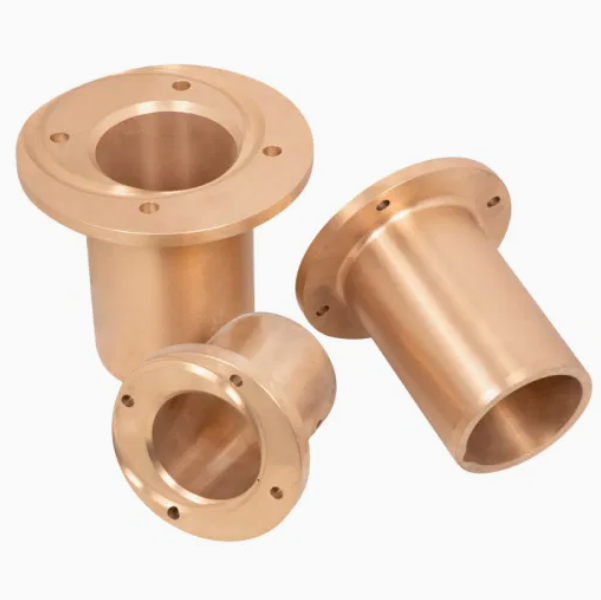
The cone crusher countershaft bushing, a critical bearing component between the countershaft and its housing, functions in load support (bearing radial and axial loads), friction reduction (minimizing energy loss at 500–1500 rpm), alignment maintenance (ensuring concentricity), and contamination protection. It requires excellent wear resistance, low friction, and dimensional stability. Structurally, it is a cylindrical or flanged sleeve comprising a bushing body (bearing bronze like ZCuSn10Pb1, babbitt metal, or steel-backed bimetallic materials), inner bearing surface (Ra0.8–1.6 μm with oil grooves), outer surface (interference fit with housing), optional flange, lubrication features (oil grooves and holes), and optional thrust faces. Its wall thickness ranges from 5–20 mm. For bronze bushings, the manufacturing process includes material selection, casting (centrifugal for cylindrical ones, sand casting for complex shapes), heat treatment (annealing at 500–600°C), and machining (rough and finish machining, oil groove machining). Bimetallic bushings involve steel shell preparation, bearing layer application (sintering or roll bonding), and final machining. Quality control covers material testing (chemical composition and hardness), dimensional checks (CMM and roundness tester), microstructural analysis, performance testing (friction coefficient and wear), and fit checks. These ensure the bushing provides precision, wear resistance, and low friction for efficient power transmission in cone crushers

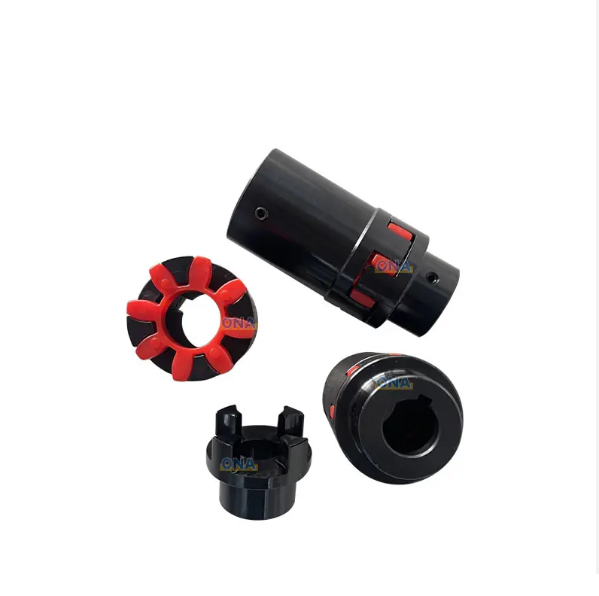
The cone crusher countershaft coupling, a critical power transmission component connecting the countershaft to the main drive system, plays key roles in torque transmission (transferring rotational power to drive the crushing motion), misalignment compensation (accommodating minor axial, radial, or angular misalignments), vibration damping (absorbing shock from load changes), and optional overload protection (via shear pins or friction discs). It requires high torsional strength, fatigue resistance, and flexibility for operation at 500–1500 rpm. Structurally, it is a flange-type or sleeve-type assembly consisting of coupling hubs (high-strength cast or forged steel with keyways/splines), a flexible element (rubber/elastomer discs, gear teeth, or pin and bushing), flange plates, fasteners, and optional shear pin holes. The coupling hubs are manufactured via casting: material selection (ZG35CrMo), pattern making (with shrinkage allowances), molding (resin-bonded sand mold), melting and pouring (controlled temperature and flow rate), cooling and shakeout, and heat treatment (normalization and tempering). The machining and manufacturing process includes hub machining (rough and finish machining), flexible element manufacturing (molding for rubber elements, gear cutting for gear-type elements), flange plate machining, assembly, and surface treatment. Quality control involves material testing (chemical composition and tensile strength), dimensional accuracy checks (CMM and fixture gauges), mechanical property testing (hardness and torsional testing), non-destructive testing (MPT and UT), and functional testing (misalignment and overload testing). These ensure the countershaft coupling enables reliable power transmission and stable cone crusher operation in mining and aggregate processing