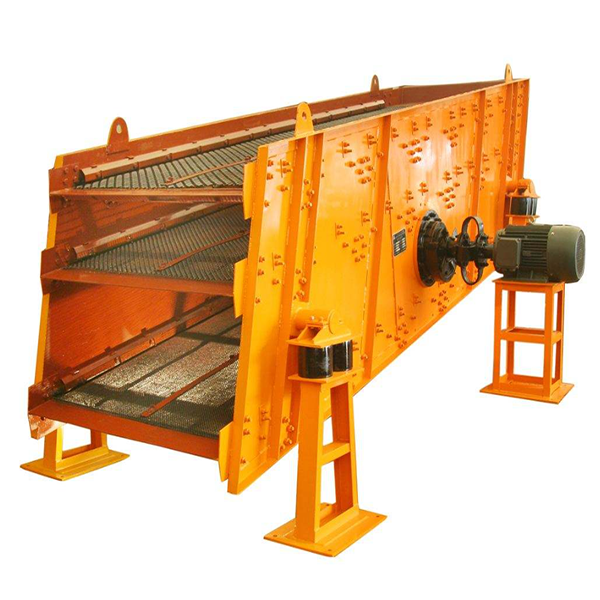
The vibrating screen works by using the reciprocating vibration generated by the vibrator excitation. The upper rotating weight of the vibrator causes the screen surface to produce a plane gyration vibration, while the lower rotating weight causes the screen surface to produce a conical gyration vibration. The combined effect causes the screen surface to produce a complex gyration vibration. Its vibration trajectory is a complex space curve. The curve is projected as a circle on the horizontal plane and an ellipse on the vertical plane. The amplitude can be changed by adjusting the exciting force of the upper and lower rotating weights. And adjusting the spatial phase angle of the upper and lower weights can change the curve shape of the screen surface motion trajectory and change the motion trajectory of the material on the screen surface.

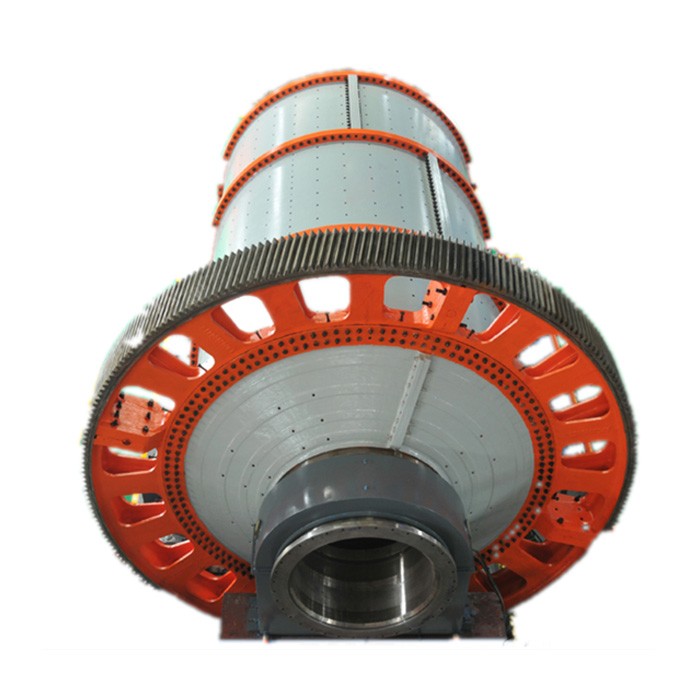
This paper details the manufacturing process and quality control measures for ball mills, critical equipment in mining, building materials, and metallurgy. The manufacturing process involves fabricating core components (cylinder, end caps, hollow shafts, transmission system, and liners) through material selection, precision machining, welding, heat treatment, and assembly. Key steps include cylinder rolling and welding, end cap casting/machining, hollow shaft forging and tempering, gear hobbing and quenching, and liner casting. Final assembly integrates these components with strict alignment and clearance controls, followed by no-load and load tests. Quality control spans three stages: material inspection (certification verification, chemical and mechanical testing), process inspection (dimensional checks, non-destructive welding testing, heat treatment validation), and finished product inspection (assembly accuracy, performance testing, and appearance checks). These measures ensure ball mills meet efficiency, durability, and safety standards, with a typical service life exceeding 10 years and liner replacement cycles of 6–12 months.

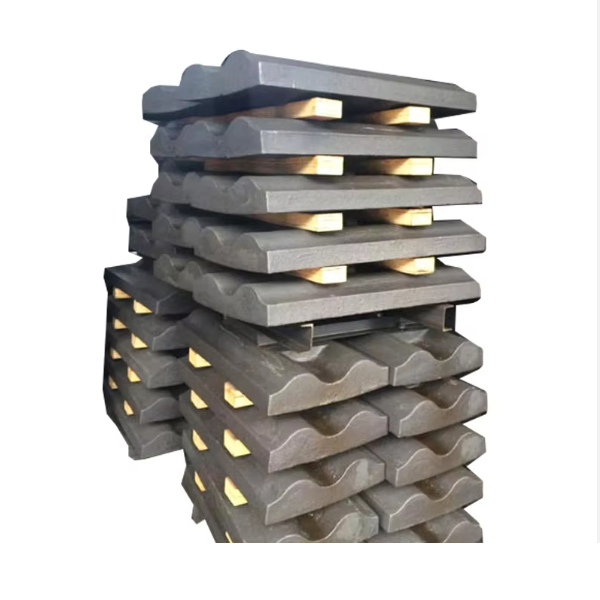
This paper provides a detailed overview of ball mill liners, critical wear-resistant components mounted on the cylinder inner wall and end covers. These liners protect the cylinder and end covers from grinding media impact and material abrasion, enhance grinding efficiency via specific surface designs, and reduce material adhesion. They require high wear resistance, adequate toughness, and good fitting performance, with common materials including ZGMn13 high manganese steel (excellent toughness after water toughening), high chromium cast iron (superior wear resistance), and bimetallic composites (balancing toughness and wear resistance).

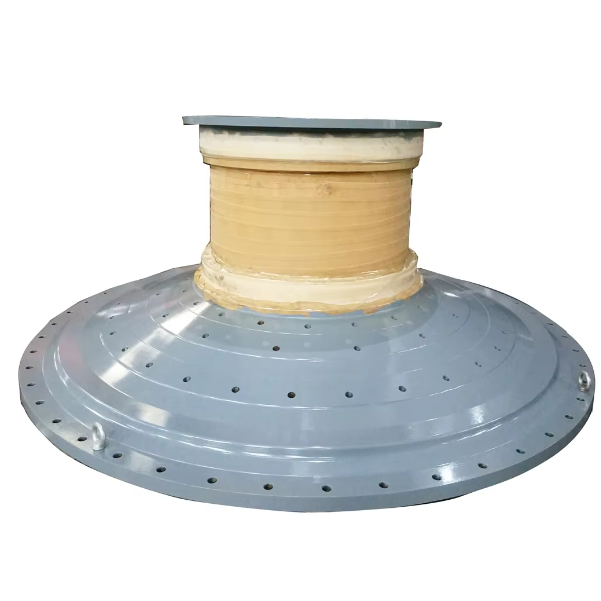
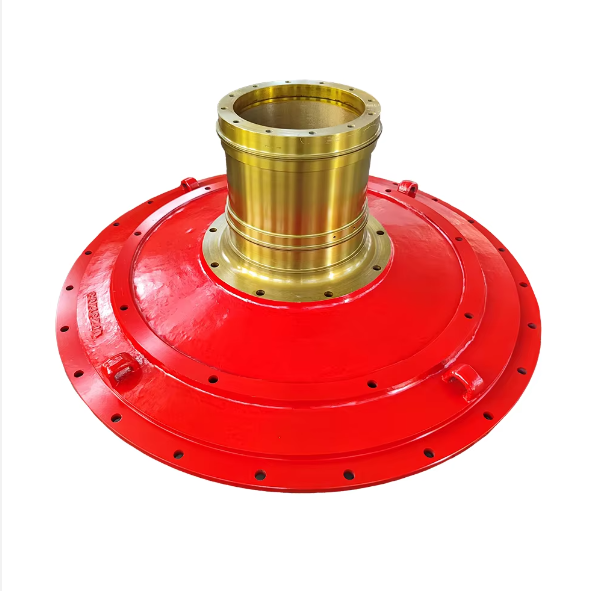
This paper elaborates on the ball mill discharge end cover, a key component at the cylinder's discharge end that seals the cylinder, guides ground materials to discharge, prevents leakage of dust and media, and bears partial loads in collaboration with the hollow shaft. It requires strength and toughness, with Q235B and Q355B steel as common materials, featuring a flanged disc structure with a central stepped hole (for hollow shaft connection) and optional internal wear-resistant liners or grid plates.

This paper details the ball mill feed end cover, a key component connecting the cylinder and feeding device, which guides materials into the cylinder, seals the cylinder end to prevent dust leakage, and forms a support structure with the hollow shaft. It requires strength and toughness, with Q235B and Q355B steel as common materials, featuring a disc or flanged structure with a central feed port and internal wear-resistant screw blades. The manufacturing process of large Q355B end covers is elaborated, including raw material pretreatment, cutting, forming, rough machining, welding (with post-heat treatment), finish machining (flange surface and feed port processing), and surface treatment. Comprehensive inspection procedures are also outlined, covering raw materials (chemical composition, mechanical properties), welding quality (non-destructive testing), dimensional accuracy (flange flatness, hole position tolerance), and final assembly compatibility and sealing performance tests. These ensure the feed end cover meets operational requirements, with a service life of 8-10 years, supporting stable feeding and sealed operation of the ball mill.

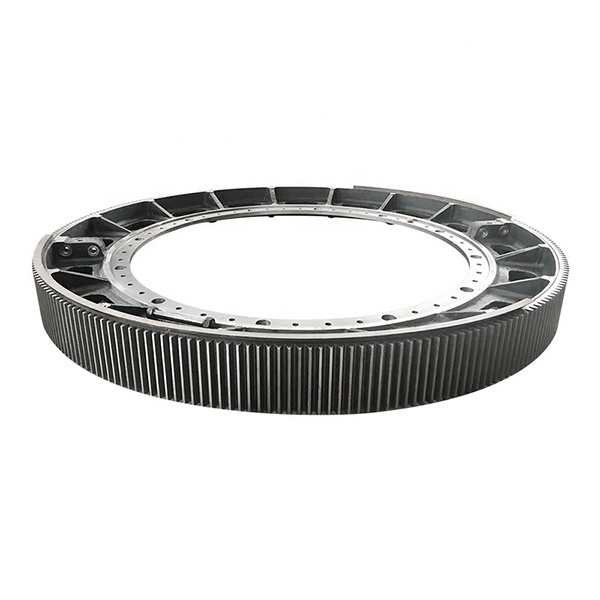
This paper elaborates on the ball mill bull gear, a key transmission component that meshes with the pinion to drive the cylinder at low speed (15-30 r/min) under heavy loads (torque up to millions of N·m), with materials like 45# steel, 42CrMo alloy steel, and ZG35CrMo cast steel for different sizes, and split structures (2-4 segments) commonly used for large gears (diameter ≥3m) for easy transportation and installation. It details the manufacturing process of 42CrMo split gears, including blank preparation (forging/cutting), rough machining with assembly, quenching and tempering, finish machining (precision gear hobbing, grinding), and surface treatment. Additionally, it outlines comprehensive inspection procedures covering raw materials (chemical composition, forging quality), heat treatment (hardness, metallographic structure), tooth profile accuracy (pitch deviation, radial runout), and final product tests (assembly accuracy, meshing performance). These ensure the bull gear meets strength, toughness, and precision requirements, enabling stable transmission with efficiency ≥94% and a service life of 3-5 years.