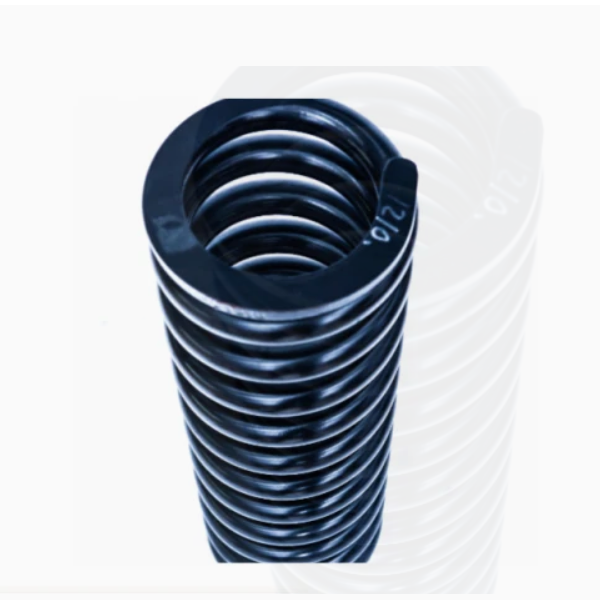
Cone Crusher Spring
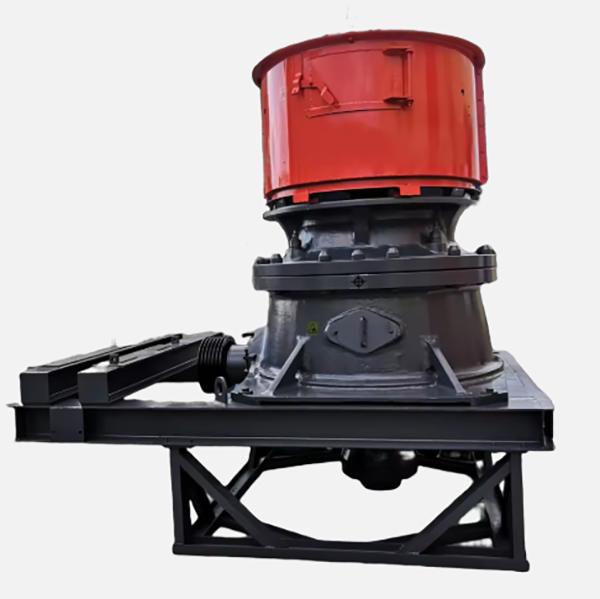
The cone crusher spring, a crucial safety and buffering component installed around the upper frame or between the adjustment ring and base, mainly functions in overload protection (absorbing impact energy to prevent damage from foreign objects), vibration damping (reducing noise and extending component life), providing reset force (restoring positions post-overload), and applying preload (maintaining stable operation). It requires high fatigue resistance, elastic limit, and corrosion resistance, operating under 50–80% of ultimate compressive strength preload.
Structurally, it is a helical compression spring consisting of a spring coil (high-carbon spring steel wire like 60Si2MnA, 20–80 mm diameter), end faces (ground flat for stability), spring diameter (OD 150–500 mm, ID, with 20–100 mm pitch), optional hooks/connections, and surface coating (zinc plating, epoxy, etc.). Its design features a spring rate of 50–200 kN/mm for large crushers.
The manufacturing process (wire forming, no casting) includes material selection and preparation (inspecting and straightening high-carbon spring steel wire), coiling (using CNC machines to control pitch, diameter, and coil number), heat treatment (quenching and tempering to achieve HRC 45–50 hardness), and end processing (grinding ends flat and deburring). For multi-spring systems, assembly involves selection/matching, mounting plate installation, and preload setting.
Quality control covers material testing (chemical composition and tensile strength), dimensional checks (CMM for coil parameters and spring rate testing), mechanical property testing (hardness and fatigue testing), non-destructive testing (MPT and UT for defects), and corrosion resistance testing (salt spray testing). These ensure the spring reliably protects against overload and dampens vibration, maintaining stable crusher operation in harsh environments
More