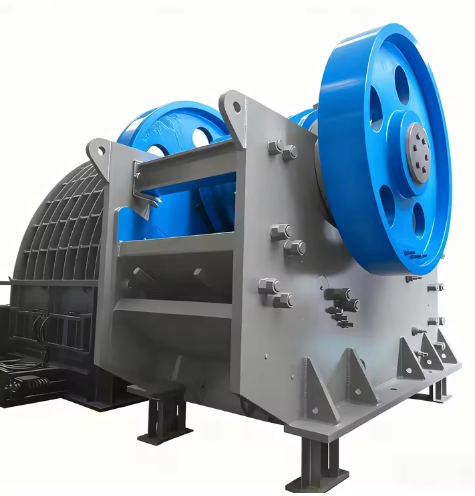
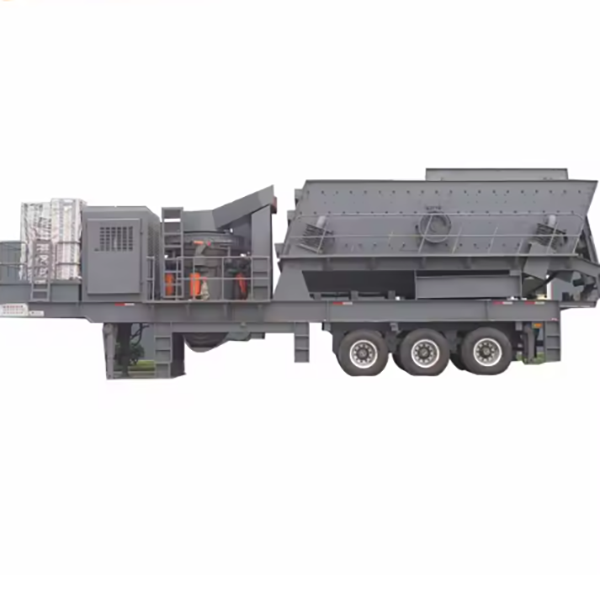
The mobile cone crusher integrates a cone crusher, feeding/screening devices, conveyors, and a mobile chassis, designed for on-site crushing of medium to hard materials (granite, basalt, etc.) with high mobility. It features a mobile chassis (frame, axles/wheels, hydraulic jacks), cone crusher unit (crushing chamber, eccentric shaft, motor), feeding/screening system, conveyors, and hydraulic/electrical controls, with a processing capacity of 50–500 t/h. Manufacturing involves welding and machining the Q355B steel chassis, casting (high-chromium cast iron for cones, ZG35CrMo for eccentric shafts) with heat treatment, and assembling components. Quality control includes material testing, dimensional inspection, performance tests (no-load/load/mobility), and safety checks. Installation requires site preparation, transportation, leveling, and commissioning. Widely used in mining, road construction, and infrastructure, it delivers uniform, high-cubicity aggregates efficiently

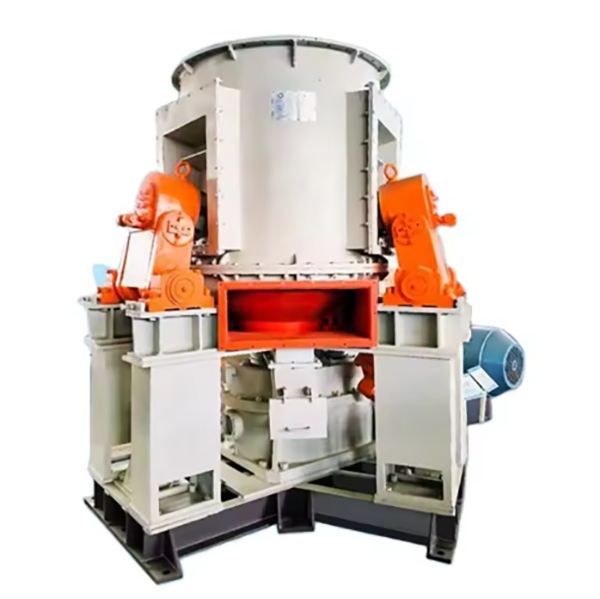
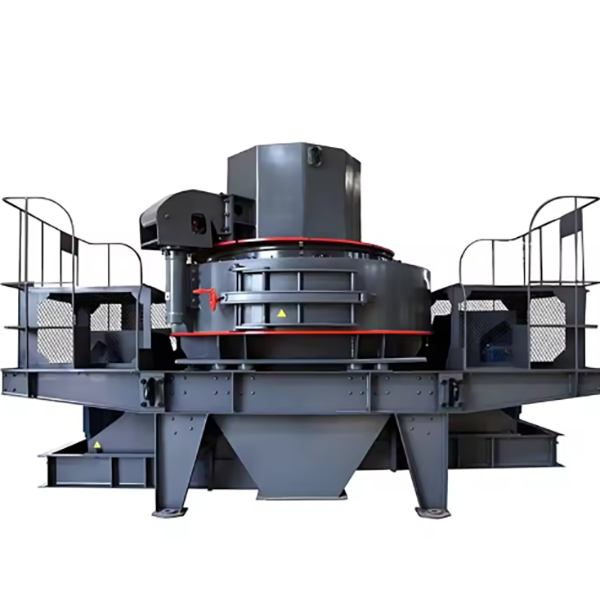
The VSI Sand Making Crusher is a high-efficiency device for producing high-quality artificial sand and shaping aggregates, utilizing "stone-on-stone" or "stone-on-iron" impact crushing with a high-speed rotor (2800–3500 rpm). It is widely used in construction and infrastructure projects, processing granite, limestone, etc., to produce sand with excellent grain shape (cubicity ≥90%, needle-like content ≤10%) and adjustable fineness modulus (2.6–3.0). Structurally, it includes a main body (upper cover, crushing chamber, lower frame), rotor assembly (rotor disk, throwing heads, main shaft), feeding system, drive system, and lubrication/cooling system. Key components like the 42CrMo rotor disk and Cr20–25 throwing heads undergo precision forging/casting, with heat treatment to ensure strength and wear resistance. Manufacturing involves forging (rotor disk, main shaft), casting (throwing heads), and CNC machining for tight tolerances. Quality control includes material testing, dimensional inspection (CMM), NDT (UT, MPT), and performance tests (dynamic balancing, load runs). Installation requires a stable foundation, precise alignment of components, and system commissioning. This crusher ensures efficient production of high-quality sand for modern construction needs.

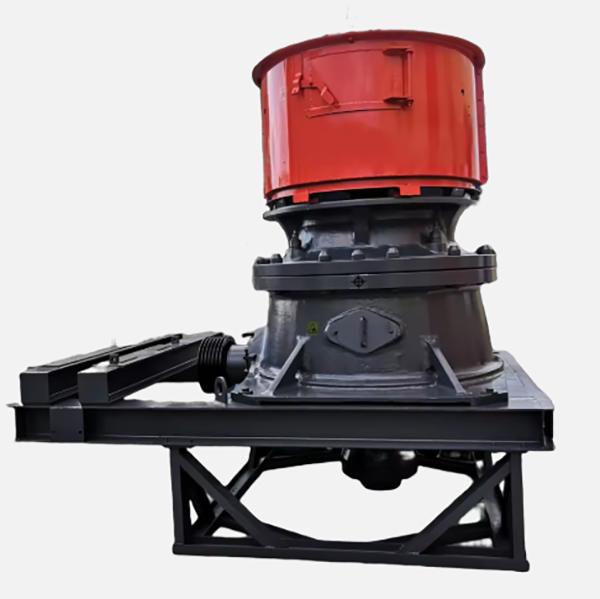
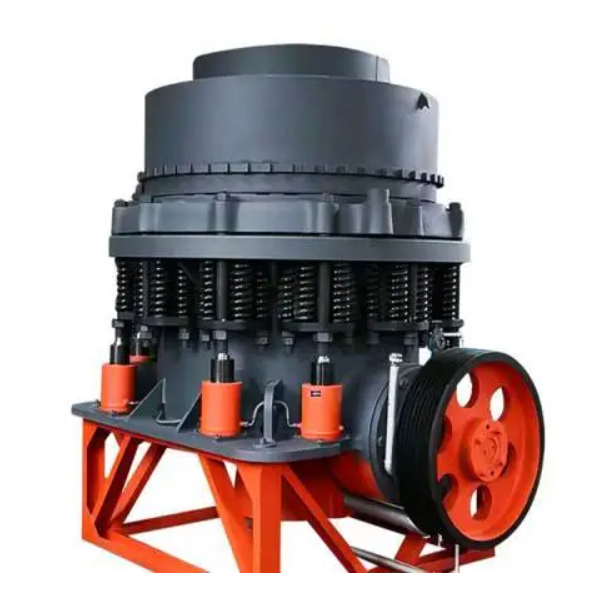
The old spring cone crusher, a traditional medium-to-fine crushing equipment, features a spring safety system and operates via a swinging crushing cone interacting with a fixed cone. Its structure includes a cast steel frame, forged main shaft, eccentric sleeve, manganese steel liners, and spring assemblies around the frame for overload protection. Manufacturing involves casting key components (frame, eccentric sleeve) from ZG270-500/ZG35CrMo with heat treatment, forging the main shaft from 42CrMo, and machining to tight tolerances. Quality control includes material testing, dimensional checks, and NDT (UT, MPT). Installation requires foundation preparation, component assembly with precise alignment, and tension adjustment of springs. Widely used in mining and construction for hard materials, it offers simplicity but lower efficiency compared to modern hydraulic models, with production capacities ranging from 10–200 t/h

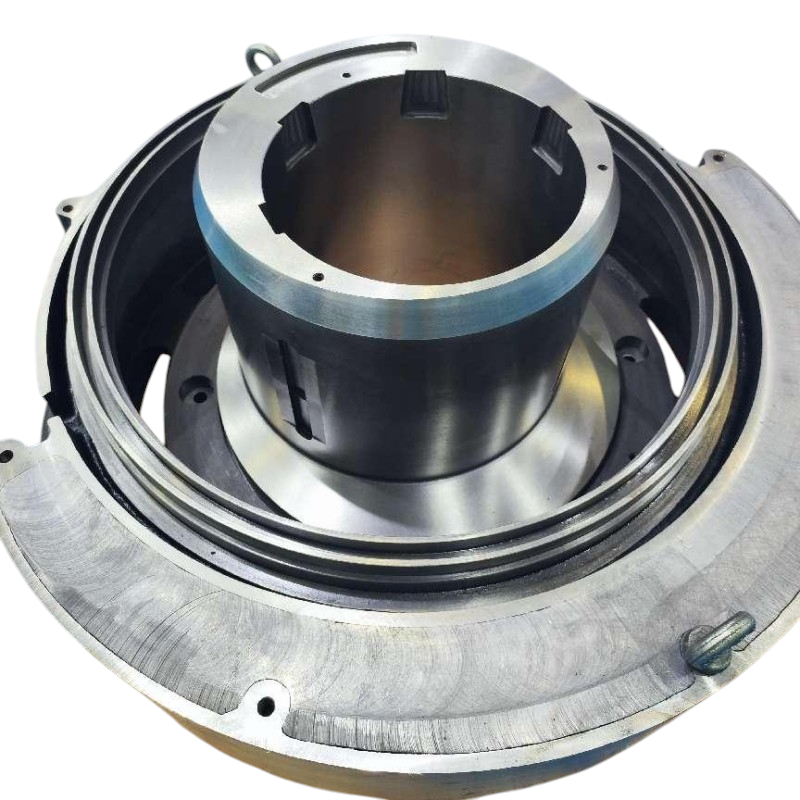
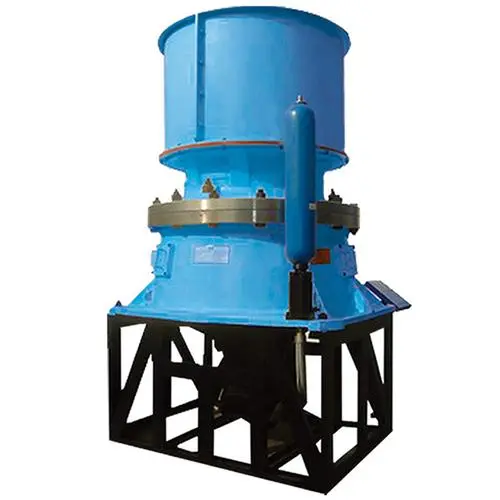
Cone crusher, a key equipment for medium and fine crushing of hard materials (compressive strength ≤300MPa), is widely used in mining, construction, etc. It crushes materials through the periodic swing of the moving cone driven by the eccentric shaft sleeve, with materials squeezed and impacted between the moving and fixed cones. Its main components include the main frame (upper and lower frames made of cast steel), crushing assembly (moving cone with 42CrMo forging body and wear-resistant liner, fixed cone with segmented liners), transmission assembly (eccentric shaft sleeve, bevel gear pair, main shaft), adjustment and safety system, and lubrication and dustproof system. Key components undergo strict manufacturing processes: frames and eccentric shaft sleeves are cast with heat treatment; moving cone bodies are forged and heat-treated; all parts go through precision machining. Quality control involves material testing, dimensional inspection, non-destructive testing, performance testing, and safety testing to ensure stable and efficient operation, meeting industrial crushing needs.

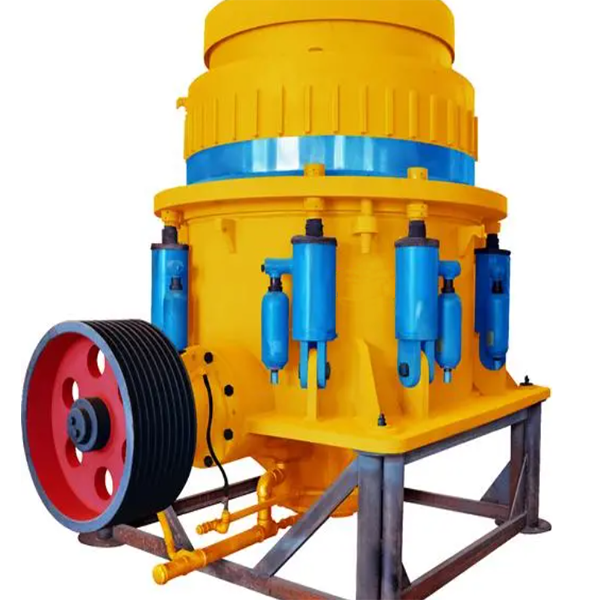
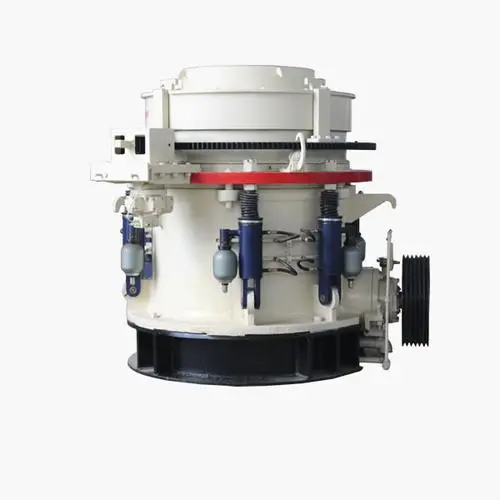
The multi-cylinder hydraulic cone crusher, an advanced equipment for medium-to-fine crushing of hard/ultra-hard materials (granite, basalt, etc.), utilizes "lamination crushing" technology. Driven by a motor, its eccentric shaft sleeve rotates to make the moving cone oscillate, crushing materials between the moving and fixed cones into uniform particles, with a capacity of 50–2000 t/h, widely used in mining, construction aggregates, etc. Structurally, it includes: main frame assembly (upper frame ZG270-500, lower frame ZG35CrMo); crushing assembly (42CrMo moving cone with Cr20/ZGMn13 liner, segmented fixed cone); transmission assembly (ZG35CrMo eccentric shaft sleeve, 20CrMnTi bevel gears); 6–12 hydraulic cylinders for discharge port adjustment (5–50 mm) and overload protection; plus lubrication (ISO VG 46 oil) and dustproof systems. Key components undergo precise manufacturing: casting (frames, eccentric sleeve) with heat treatment; forging (moving cone) and CNC machining. Quality control involves material testing (spectrometry, tensile tests), dimensional inspection (CMM, laser scanning), NDT (UT, MPT), and performance tests (dynamic balancing, 48-hour crushing run). Its advantages lie in high efficiency, excellent product cubicity (≥85%), reliable hydraulic safety, and adaptability to tough materials, serving as core equipment in modern crushing lines

a. High efficiency: The hydraulic cone crusher has supports at the upper and lower ends of the main shaft, which can withstand greater crushing force and greater stroke, and the special crushing cavity shape compatible with the lamination principle makes the machine more High crushing efficiency. b. Large production capacity: The hydraulic cone crusher is designed with a perfect combination of crushing stroke, crushing speed and crushing cavity shape, so that the output of the machine is 35% ~60% higher than that of the old spring cone crusher when the diameter of the large end of the moving cone is the same. c. High-quality stones: The hydraulic cone crusher adopts the unique shape of the crushing cavity and the principle of lamination crushing to produce the crushing effect between particles, so that the proportion of cubes in the finished product is significantly increased, the needle-shaped stones are reduced, and the particles are reduced. The level is more uniform. d. The medium and fine crushing of various cavity shapes can be realized by only replacing the fixed cone. e. The hydraulic and lubrication system controlled by double insurance can ensure the overload protection of the machine and good bearing lubrication. f. Easy to maintain: the cone crusher has a simple and compact structure, stable performance and not easy to malfunction. Maintenance is convenient and quick.