
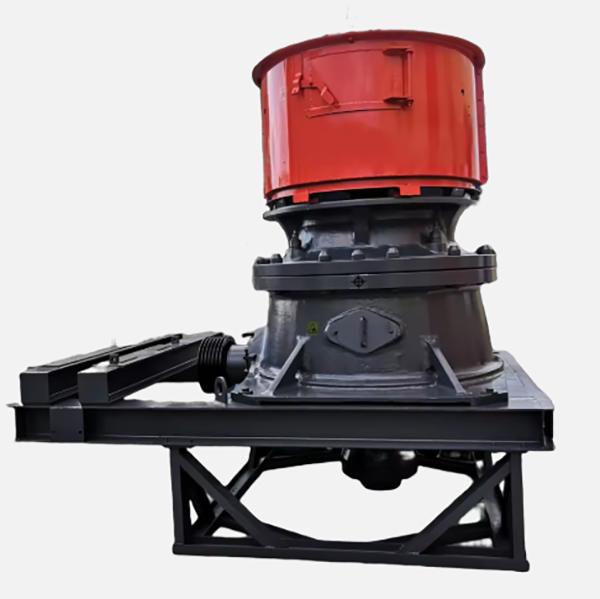
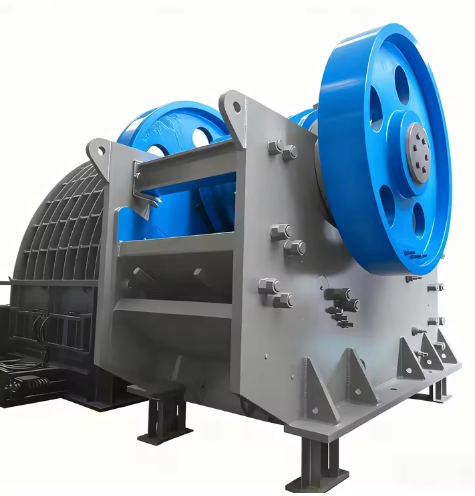
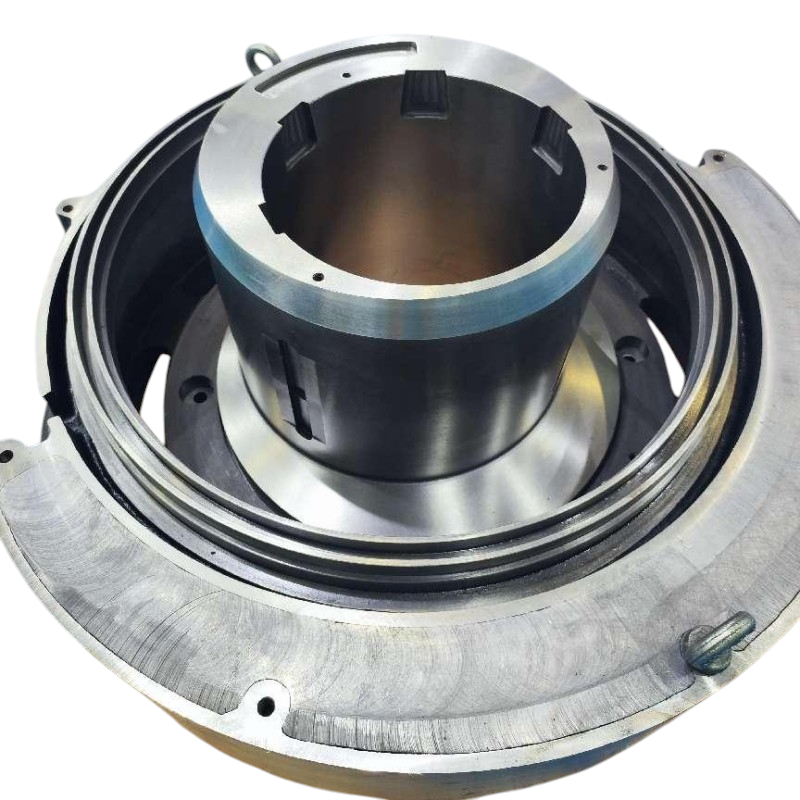
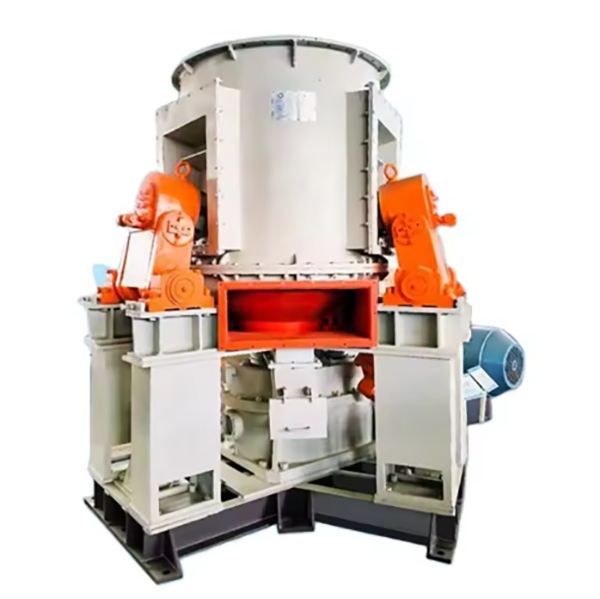
As core crushing equipment in the mining, building materials, and metallurgical industries, the service life of cone crushers directly determines the continuous operation efficiency and comprehensive operating costs of production lines. Under high-load, heavy-wear, and frequent-impact working conditions, the average service life of traditional cone crushers is usually 8 to 12 years, and the replacement cycle of wearing parts (such as liners and eccentric sleeves) is only 800 to 1,200 hours. Frequent shutdowns for maintenance increase the cost per ton of ore by 15% to 25%. In recent years, with the development of materials science, structural mechanics, and intelligent monitoring technologies, extending equipment service life through multi-dimensional technological innovation has become a research focus in the industry. Combining authoritative domestic and foreign literature with engineering test data, this paper systematically elaborates on the key technical paths for extending the service life of cone crushers, providing theoretical support and application references for industrial practice.
I. Upgrading of Core Wear-Resistant Part Materials: From Single Wear Resistance to Synergistic Performance Optimization
Wear failure of wearing parts (concave liners, mantle liners, copper sleeves, etc.) is the primary factor restricting the service life of cone crushers, and their material performance directly determines the service cycle of components and the operational stability of equipment. Traditional high manganese steel (ZGMn13) relies on impact hardening characteristics, resulting in insufficient wear resistance under medium and low impact conditions. Its average service life is only 800 to 1,200 hours, and the annual replacement frequency reaches up to 3.2 times in scenarios involving high-silicon ore processing. In recent years, the generational upgrading of material systems has provided core support for extending the service life of wearing parts, forming a diversified technical route of "alloy steel strengthening, high chromium cast iron specialization, and gradient composite optimization."
Medium-carbon multi-alloy steels (such as ZG40CrMnMo and ZG35SiMnCrNiMo) achieve precise matching of matrix strength and toughness by adding strengthening elements such as chromium, molybdenum, and nickel. After quenching and tempering treatment, their hardness can reach HRC48-52, and impact toughness remains above 45J/cm², with abrasive wear resistance improved by approximately 60% compared to traditional high manganese steel. Comparative test data from a large iron mine in Shandong Province from 2022 to 2024 shows that concave liners made of ZG40CrMnMo material have an average service cycle extended to 1,850 hours under the same working conditions, reducing spare part replacement costs by 37% and unplanned equipment downtime by 42%. High chromium cast iron (Cr15-Cr28) exhibits excellent wear resistance in high-hardness material crushing scenarios due to its弥散ly distributed M7C3-type hard carbides. Testing data from China Building Materials Inspection and Certification Group in 2024 indicates that the volume wear rate of concave liners made of high chromium cast iron with 26% chromium content is only 28.6% that of high manganese steel in granite crushing simulation tests. However, due to its high brittleness (impact toughness ≤15J/cm²), it is only suitable for low-impact load conditions.
The industrial application of gradient composite material technology has broken through the performance bottlenecks of single materials. Through the bimetallic composite casting process of "wear-resistant layer + tough matrix," the working surface hardness of concave liners reaches above HRC60, while the back toughness layer maintains HRC35-40, achieving synergistic optimization of wear resistance and impact resistance. Bimetallic composite concave liners put into production by a Jiangsu equipment enterprise in 2023 still met production requirements after 2,170 hours of continuous operation in a limestone mine in Yunnan Province, with service life nearly 2.3 times longer than that of single high manganese steel products and fracture failure risk reduced by more than 80%. In addition, the application of additive repair technologies such as laser cladding has further extended the life cycle of wearing parts. The remanufacturing cost of repaired components is only 45% that of new products, and carbon emissions are reduced by 58%, achieving dual improvements in economy and environmental protection.
II. Optimization of Crushing Chamber and Structural Parameters: Reducing Local Wear and Stress Concentration
As the core working area of cone crushers, the design of geometric parameters of the crushing chamber directly affects material crushing trajectory, force distribution, and uniform wear of components. Due to unreasonable inclination angles and extensive design of cavity curves, traditional crushing chambers lead to local stress concentration during material crushing, with the uneven wear coefficient of liners reaching 1.8-2.5. The service life of locally over-worn areas is shortened by more than 40% compared to the average level. Optimal design of the crushing chamber based on the constant wear criterion has become a key technical means to extend the overall service life of equipment.
Scholars such as Zhang proposed in the paper "Constant Wear Criterion for Optimization of the Crushing Chamber of Cone Crushers" that by establishing a particle pressure model, analyzing the influence of normal and tangential components of crushing pressure on liner wear, and combining with the mantle adjustment mechanism to achieve wear compensation, the wear uniformity of the crushing chamber can be significantly improved. Their team verified through industrial tests on ZS 200 MF type cone crushers that the crushing chamber optimized based on the constant wear criterion maintained stable production capacity at 83.45 t/h during continuous operation without obvious downward trends. The proportion of calibrated size products decreased by only 6.2%, and the wear similarity coefficient was controlled within 8.82%, effectively delaying equipment performance degradation and extending the overall service cycle of liners by more than 30%.
In addition to cavity optimization, the structural optimization of core load-bearing components such as the main shaft and eccentric sleeve is equally important. Maintenance cases of cone crushers in a large concentrator show that optimizing the main shaft diameter and eccentricity parameters through finite element analysis (FEA) reduces the local stress concentration coefficient by 28%. Combined with surface quenching treatment to increase hardness to HRC55-58, the fatigue life of the main shaft is extended by more than 50%, and equipment failure rate is reduced by 32%. At the same time, the application of hydraulic system pressure dynamic monitoring technology can real-time adjust system pressure to match working conditions, avoiding component deformation and fracture caused by overload impact. Engineering practice data shows that this technology can reduce hydraulic system failure downtime by 65% and extend the overall service life of equipment by 15%-20%.
III. Innovation of Operation and Maintenance Strategies: Transformation from Preventive Maintenance to Predictive Maintenance
The scientific nature of operation and maintenance modes directly affects the full-life cycle service life of cone crushers. The traditional preventive maintenance mode replaces components based on fixed time intervals, resulting in over-maintenance or under-maintenance issues, increasing maintenance costs by more than 30%. At the same time, failure to detect potential faults in a timely manner may lead to sudden component failure and shorten the overall service cycle of equipment. Predictive maintenance (PdM) technology based on condition monitoring and fault diagnosis, which achieves precise control of maintenance timing by real-time capturing equipment operating status parameters, has become a core guarantee for extending equipment service life.
Vibration analysis, oil spectrum analysis, and temperature monitoring are the core means of condition monitoring for cone crushers. The main shaft bearing fault diagnosis method based on wavelet packet energy proposed by Zhang et al. can effectively identify early fault characteristics by analyzing the energy distribution of vibration signals in different frequency bands, with a fault diagnosis accuracy of over 92%. This provides a precise basis for preventive bearing replacement, avoiding main shaft damage and overall equipment shutdown caused by bearing failure. Application practice in a large mine from 2023 to 2024 shows that real-time monitoring of metal particle content in hydraulic oil using oil spectrum analysis technology can early warn potential faults such as copper sleeve wear and main shaft corrosion, reducing downtime caused by such faults by 70%, lowering equipment maintenance costs by 45%, and extending overall service life by 22%.
In addition, standardized daily operation and maintenance processes are the basic guarantee for extending equipment life. Data from the "White Paper on Operating Performance of Key Components of Mining Crushing Equipment" released by China Heavy Machinery Industry Association in 2023 shows that strictly implementing lubrication management specifications (regular replacement of lubricating oil suitable for working conditions and controlling oil cleanliness ≤ NAS 8 grade) can reduce the wear rate of rotating components such as eccentric sleeves and spherical bearings by more than 35%; regular cleaning of material accumulation in the crushing chamber and inspection of liner fastening status can avoid component damage caused by local impact loads, reducing the unplanned equipment shutdown rate by more than 50%.
IV. Conclusions and Prospects
Extending the service life of cone crushers is the result of multi-dimensional synergistic effects of material upgrading, structural optimization, and operation and maintenance innovation. Engineering practice shows that the adoption of new wear-resistant materials (medium-carbon multi-alloy steel, bimetallic composite materials) can extend the service life of wearing parts by 60%-130%; optimization of the crushing chamber based on the constant wear criterion can reduce local wear by more than 40%; and the application of predictive maintenance mode can extend the overall service life of equipment by 15%-22%. The combination of these three can reduce the full-life cycle cost of equipment by 30%-45%.
In the future, with the in-depth integration of big data, artificial intelligence, and the Internet of Things technologies, cone crushers will transform into a full-life cycle management model of "intelligent perception-precise diagnosis-autonomous operation and maintenance." Real-time collection of multi-dimensional operating data through embedded sensors, combined with machine learning algorithms to build fault prediction models, will achieve precise prediction of wear status and dynamic optimization of maintenance strategies, further breaking through the bottleneck of service life. At the same time, the development of green manufacturing technologies (such as low-energy consumption structural design and recyclable wear-resistant materials) will extend equipment life while achieving energy conservation and environmental protection goals, providing core support for the high-quality development of the mining machinery industry.
References
[1] Anonymous. Graduation Thesis on Cone Crusher Maintenance[EB/OL]. Renrendoc, December 6, 2025. https://www.renrendoc.com/paper/495665389.html.
[2] Anonymous. 2025 and the Next 5 Years China Cone Crusher Concave Liner Industry Market In-depth Evaluation and Investment Direction Research Report[EB/OL]. Docin, January 11, 2026. https://www.docin.com/touch_new/preview_new.do?id=4929882698.
[3] Zhang Z, Ren T, Cheng J. Constant Wear Criterion for Optimization of the Crushing Chamber of Cone Crushers[J]. Minerals, 2022, 12(7): 807. https://doi.org/10.3390/min12070807.
